

The Depop Dropshippers Guide.
A field guide to actually making money reselling on Depop: what to source, how to price it, how to shoot it, and how to get found. No shortcuts, no fake numbers.
Finding items worth reselling
Most people flopping at resale aren’t bad at photos or pricing. They’re sourcing the wrong stuff. Demand signals exist before you ever list something. Learn to read them.
Likes and bags tell you more than the price does.
A listing with real engagement, people saving it and adding it to their bag, has already proven someone wants it at roughly that price. An unliked listing sitting for weeks tells you the opposite, no matter how “good” it looks.
Pick a niche and stay in it long enough to learn it.
You can’t price or spot a good deal in a category you don’t understand. Go deep on one lane (streetwear, Y2K, outerwear) before spreading wide.
Time your sourcing to the season.
Outerwear and cozy layers move in autumn and winter; going-out pieces spike around the holidays. Sourcing in-season beats sourcing “on trend.”
Red flag: good photos, dead engagement.
A great-looking item that’s been sitting untouched for weeks is usually overpriced or in a saturated category, not a hidden gem.
Broad categories are a trap. Go narrow.
Search a big umbrella term like “Y2K” or “grunge” and you’re competing with tens of thousands of listings, most from people doing exactly what you are. A specific subniche inside it has a fraction of the competition and buyers who know precisely what they want.
Some categories only make sense in-season.
Cozy knits spike hard in the run-up to Christmas; going-out pieces spike for New Year’s; outerwear is a winter category, full stop. Sourcing the right thing at the wrong time of year is wasted effort.
The Depop Scanner sits on your Depop search tab and queues only the items that pass your likes, bags, price and listing-age filters.

Pricing for sales, not for margin on paper
Undercutting an asking price only works if the asking price was ever a fair one. Price against what things actually sell for, not what someone wishes they’d sell for.
Asking price ≠ market price.
If a similar item’s been listed for weeks with no bites, undercutting it just gives you a slightly-less-overpriced item. Look at what’s actually selling in your category, not just what’s listed.
.99 pricing isn’t a gimmick. It’s a real perception shift.
£22.99 reads as meaningfully cheaper than £23 to a scrolling buyer, even though the difference is a penny. Use it consistently.
Know your real number after fees.
Depop takes a cut of every sale. The price on the listing isn’t what lands in your pocket, so always work from what you actually keep, not the sticker price.
Margin decides how many sales you actually need.
Hit a £2,000 target selling £4-margin items and you need over 500 sales. Hit the same target at £50 margin and it’s 40. Low-margin accessories feel like “easy wins” but the volume required to matter is brutal. Chase margin, not just ease of sale.
A price that “should” work on paper and a price that actually converts are two different numbers. Only one of them pays you.
Photos that actually sell
Photography is the single biggest lever on whether someone even stops scrolling. Buyers decide in under a second, before they’ve read a word of your listing.
Consistency reads as trust.
A shop where every photo shares the same background, lighting and framing looks like a real business, not a random pile of stuff. Buyers notice, even if they can’t say why.
Shoot for the scroll, not the archive.
The first photo has to work as a thumbnail: clear subject, no clutter, good contrast against the background. That’s the one doing all the work.
Multiple angles kill hesitation.
Buyers who can’t picture texture, fit or flaws move on. A close-up of stitching or a tag answers a question before it’s asked.
The bar is lower than you think.
Plenty of listings with a blurry photo and a four-word description still sell, because so much of the competition isn’t even trying. Doing the basics properly (good light, clean background, a real description) is a genuine edge, not just a nice-to-have.

The Automation Bot cuts the item out and places it on the background you upload once, so every listing matches.

Listing copy that gets found
A listing nobody sees can’t sell. Depop’s search ranks on relevance first, so get that right before you worry about how clever the caption sounds.
Lead with what people actually search.
“Y2K Zara purple hoodie” beats “cozy purple top” every time: brand, era and item type up front, not buried under adjectives.
Use every hashtag slot.
Five tags cover five extra searches. Using one and leaving four empty is giving away free visibility for nothing.
Answer the DM before it’s sent.
Condition, material, rough sizing: say it up front. Every question you pre-answer is a sale that doesn’t stall waiting on a reply.
Relevance is the single biggest ranking factor on Depop. A perfect photo on an invisible listing sells nothing.
Trust and consistency
Depop rewards shops that show up regularly, and so do buyers. A shop that posts in bursts and goes quiet reads differently than one that’s steady.
Response time is a ranking signal, not just manners.
Fast replies build a trust score that acts as a multiplier across every listing you have, not just the one someone messaged about.
Steady beats bursty.
Ten listings dripped out over two weeks outperforms ten dumped in one afternoon then nothing for a month. Freshness is part of how you get surfaced.
A shop people recognize is a shop people follow.
Consistent photo style and voice turn one-time buyers into repeat browsers. That’s worth more long-term than any single listing.


Growing an audience honestly
Followers and sales are not the same number. It’s entirely possible to have thousands of one and almost none of the other. The difference is how the audience got there.
Following and liking accounts in your niche is a real way to get started.
Early on, before you have organic reach, actively following and liking items in your niche is a legitimate way to get your shop seen and build an initial following. Plenty of accounts, including mine, start this way.
A “follow back” line in your bio works the same way, out loud.
Stating plainly that you follow back turns every profile visit into a chance at a mutual follow, instead of hoping people do it unprompted. Simple, honest, and it compounds while you’re building your initial base.
But a big following isn’t the same as buyers.
Below is my actual account: over 2,000 followers and £294 in all-time sales. That gap is the whole lesson. A following built mostly on reciprocal follow-backs is largely other sellers doing the same thing, not people browsing to buy.
Real engagement converts better than reciprocal follow-backs.
Liking and commenting on style-matched items puts you in front of people actually browsing to buy, not just people trading follows. Worth weighting your time toward this over time, even if follow-backs are a fine way to get moving initially.
That’s different from buying followers or faking proof.
Following real accounts yourself is normal. Paying for followers or posting fabricated earnings screenshots is a different thing entirely. It builds an audience (or a claim) that was never real in the first place, and it’s the kind of thing that torches trust the moment it’s noticed.
Scale sideways once the fundamentals hold.
Add a new category or lean into a new season only once your current lane is converting consistently. More volume on a shaky foundation just multiplies the problem.


Fulfillment: getting it to the buyer
A sale isn’t the finish line. How you handle the gap between someone paying and the item arriving decides whether they buy from you again, or leave a review that tanks your trust score.
You don’t hold stock. You order once it’s sold.
The item gets sourced (for me, from AliExpress) only after the Depop sale goes through, then shipped on to the buyer. No upfront capital tied up in inventory that might not sell.
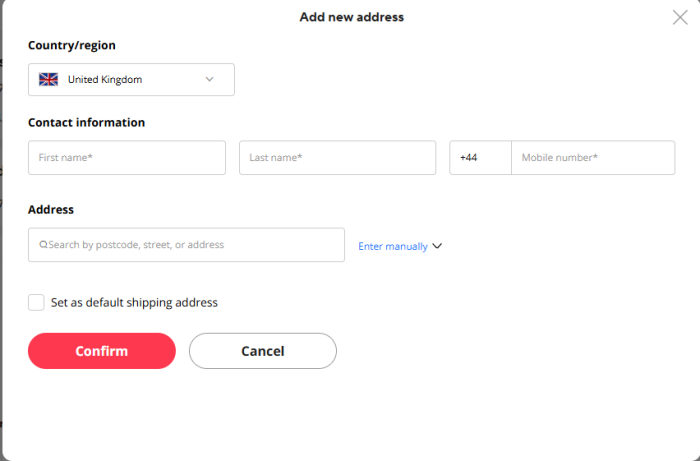
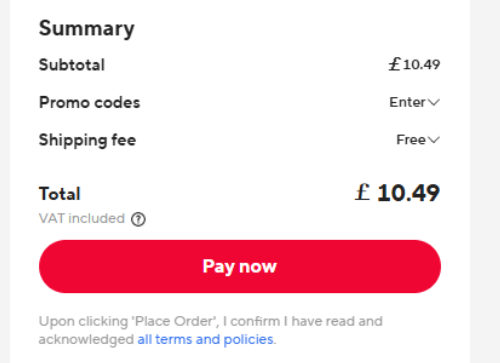
When you place the AliExpress order, the address you enter is the buyer’s, not yours.
This is the actual checkout screen: the address form is where you fill in the buyer’s shipping details so it ships straight to them, and the order summary is where you see the shipping fee for that order. Shipping cost varies by item and supplier, so check it each time rather than assuming it matches your last order. It directly eats into your margin from Module 02.
Set your shipping method to “Other” so you can enter tracking yourself.
You won’t have a label printed at the time of sale like a normal secondhand seller would. This setting lets you add real tracking once you’ve placed the order, instead of getting stuck on Depop’s standard label flow.
Tell the buyer a realistic delivery window, not an optimistic one.
Say so plainly in the listing or a follow-up message rather than letting them assume same-week dispatch. A buyer who knows to expect it rarely complains; a buyer who doesn’t will.
Have a real plan for when the item’s gone by the time you order it.
It happens. Decide upfront whether you refund immediately or offer a close match with the buyer’s OK. Don’t leave them guessing while you figure it out after the fact.
Track it, and speak up before they have to ask.
A quick unprompted update when something’s delayed does more for trust than a fast reply after a complaint. It ties straight back to the response-time lesson in Module 05.
The one non-negotiable: say something honest about shipping time before they buy, not after. It costs you nothing, and it’s the difference between a fair transaction and a buyer who feels misled.